

Congratulations to Sabina Nicolae on passing her PhD viva!

COP26 has begun! Professor Magda Titirici discussed 'Beyond Lithium Ion Batteries'.
In the run up to COP26, Royal Society of Chemistry convened a series of events on chemical science’s role in tackling sustainability and climate change challenges, exploring opportunities and inspirational stories from across the global chemical science community, including many speakers from the Faraday Institution, the UK's flagship battery research programme.
Professor Titirici joined the discussion on beyond lithium ion batteries, covering the cutting edge chemistry underlying next generation battery innovations, their potential, their limitations and their pathways to mass adoption.
Watch the recording here!
Here is the whole series of Chemistry and COP26 events on RSC.
BBC Inside Science Podacast with Professor Magda Titirici
BBC Inside Science is a weekly programme that illuminates the mysteries and challenges the controversies behind the science that's changing our world.
Click here to join Professor Titirici on understanding how food waste may help with the development of a more sustainable generation of batteries.
Professor Magda Titirici on Sky News: using nature inspired materials for energy storage and conversion
Professor Magda Titirici was interviewed on Sky News Climate Live Show on 24 Aug and shared our approaches to tackle the climate crisis by transferring biomass waste into energy storage and conversion materials.
Recording of the interview can be found here.

Professor Magda Titirici has been recognised with the Kavli Medal and Lecture by the Royal Society.
The Kavli Medal and Lecture is awarded annually for excellence in all fields of science and engineering relevant to the environment. The medal is of bronze gilt and is accompanied by a gift of £1,000.
Professor Magda Titirici, Chair in Sustainable Energy Materials in the Department of Chemical Engineering, was awarded the medal for her outstanding contributions to advancing the sustainability of energy storage and conversion technologies by performing interdisciplinary research at the interface between electrochemistry, materials science and chemical engineering.
https://royalsociety.org/grants-schemes-awards/awards/kavli-medal-lecture/
https://www.imperial.ac.uk/news/228713/imperial-academic-awarded-royal-society-medal/

New Publication on Iron, Nitrogen Co-Doped Carbon Spheres as Low Cost, Scalable Electrocatalysts for the Oxygen Reduction Reaction
Atomically dispersed transition metal-nitrogen-carbon catalysts are emerging as low-cost electrocatalysts for the oxygen reduction reaction in fuel cells. However, a cost-effective and scalable synthesis strategy for these catalysts is still required, as well as a greater understanding of their mechanisms. Herein, iron, nitrogen co-doped carbon spheres (Fe@NCS) have been prepared via hydrothermal carbonization and high-temperature post carbonization. It is determined that FeN4 is the main form of iron existing in the obtained Fe@NCS. Two different precursors containing Fe2+ and Fe3+ are compared. Both chemical and structural differences have been observed in catalysts starting from Fe2+ and Fe3+ precursors. Fe2+@NCS-A (starting with Fe2+ precursor) shows better catalytic activity for the oxygen reduction reaction. This catalyst is studied in an anion exchange membrane fuel cell. The high open-circuit voltage demonstrates the potential approach for developing high-performance, low-cost fuel cell catalysts.
New Publication on Homogenous metallic deposition regulated by defect-rich skeletons for sodium metal batteries

Innovation News Network interviews Professor Titirici about the importance of graphite as a critical material and the latest battery research trends to achieve net zero ambitions.
Professor Magda Titirici outlines the role of graphite in battery technology and how the latest research is helping to shape and achieve net zero targets in the interview with Lisa Carnwell, Managing Editor at Innovation News Network.
https://www.innovationnewsnetwork.com/graphite-battery-research-road-net-zero/14007

Professor Magda Titirici recognised as distinguished materials scientist
Professor Magda Titirici has been named by the IOM3 as the Griffith Medal and Prize winner 2021 in recognition of her distinguished work in the field of materials science.
Professor Titirici’s award highlights her international recognition in the field of sustainable energy materials, based on her ground-breaking scientific discoveries in sustainable materials energy storage and conversion technologies. To date she has 250 publications with over 25,000 citations, and she has been part of the Clarviate 1% top cited global researchers over the past 4 years.
The judging panel also noted her passion for educating younger sustainable materials scientists of the future and for outreach activities, including her involvement in the ‘I Can Be’ charity which inspires young girls from under-privileged backgrounds to pursue science and engineering.
https://www.imperial.ac.uk/news/223253/professor-magda-titirici-recognised-distinguished-materials/
Congratulations to Silvia and Mengnan on receiving the Bansal Bursary and Burkett Scholarship
Silvia Fabero is awarded with the Bansal Bursary, which is donated by Dr Vik Bansal (a former graduate of the Department) and presented to the highest ranking of our graduates who continues to do a PhD in the Department in recognition of exceptional merit and potential.
Mengnan Wang is awarded the Burkett Scholarship, which was established in the Department of Chemical Engineering to recognise the outstanding achievements of the PhD student in first or second year. The Scholarship is donated by Dr Richard Burkett, an alumnus of the Department with a distinguished industrial career.
Congratulations to the well-deserved awards!
New generation of supercapacitors set to electrify green transportation
Collabrating with University College London Electrochemical Innovation Lab (UCLEIL), we have produced a cheaper, more sustainable and energy-dense electrode material for supercapacitors which could pave the way for wider market penetration of this high-power, quick charging electric vehicle technology.
doi.org/10.1002/advs.202100016
https://www.imperial.ac.uk/news/223353/new-generation-supercapacitors-electrify-green-transportation/
Supercapacitors are increasingly used in short-distance electric transportation due to their long lifetime (≈15 years) and fast charging capability (>10 A g−1). To improve their market penetration, while minimizing onboard weight and maximizing space-efficiency, materials costs must be reduced (<10 $ kg−1) and the volumetric energy-density increased (>8 Wh L−1). Carbon nanofibers display good gravimetric capacitance, yet their marketability is hindered by their low density (0.05–0.1 g cm−3). Here, the authors increase the packing density of low-cost, free-standing carbon nanofiber mats (from 0.1 to 0.6 g cm−3) through uniaxial compression. X-ray computed tomography reveals that densification occurs by reducing the inter-fiber pore size (from 1–5 µm to 0.2–0.5 µm), which are not involved in double-layer capacitance. The improved packing density is directly proportional to the volumetric performances of the device, which reaches a volumetric capacitance of 130 F cm−3 and energy density of 6 Wh L−1 at 0.1 A g−1 using a loading of 3 mg cm−2. The results outperform most commercial and lab-scale porous carbons synthesized from bioresources (50–100 F cm−3, 1–3 Wh L−1 using 10 mg cm−2) and contribute to the scalable design of sustainable electrodes with minimal ‘dead volume’ for efficient supercapacitors.

Publication: Progress and Perspectives in Photo- and Electrochemical-Oxidation of Biomass for Sustainable Chemicals and Hydrogen Production
Biomass is recognized as an ideal CO2 neutral, abundant, and renewable resource substitute to fossil fuels. The rich proton content in most biomass derived materials, such as ethanol, 5-hydroxymethylfurfural (HMF) and glycerol allows it to be an effective hydrogen carrier. The oxidation derivatives, such as 2,5-difurandicarboxylic acid from HMF, glyceric acid from glycerol are valuable products to be used in biodegradable polymers and pharmaceuticals. Therefore, combining biomass-derived compound oxidation at the anode and hydrogen evolution reaction at the cathode in a biomass electrolysis or photo-reforming reactor would present a promising strategy for coproducing high value chemicals and hydrogen with low energy consumption and CO2 emissions. This review aims to combine fundamental knowledge on photo and electro-assisted catalysis to provide a comprehensive understanding of the general reaction mechanisms of different biomass-derived molecule oxidation. At the same time, catalyst requirements and recent advances for various feedstock compounds are also reviewed in detail. Technoeconomic assessment and life cycle analysis are performed on various feedstocks to assess the relative benefits of various processes, and finally critical prospects are given on the challenges and opportunities for technology development to meet the sustainability requirement of the future global energy economy.

Professor Titirici at the House of Lords
Professor Titirici had a discussion on critical materials for batteries, fuel cells and electric motors together with Prof Herrington from National History Museum, Dr Anderson from the Birmingham Energy Institute and Dr Petavratzi from Brirtish Geological Survey.
Watch the full discussion at Parliamentlive.tv
parliamentlive.tv/Event/Index/c1e06ecf-bdab-4638-a740-b9be9a69010f
Congratulation to Dr. Alptekin to be soon.
Congratulations to Hande Alptekin onpassing her PhD viva! This time we celebrated with a real hat and real hugs.
Strategies for High Energy Density Dual‐Ion Batteries Using Carbon‐Based Cathodes
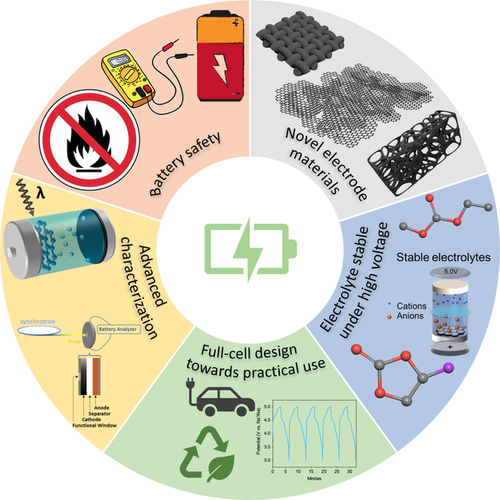
The rapid-growing demands for lithium-ion batteries (LIBs) have raised concerns over lithium's scarcity as well as the scarcity of other materials and components used in LIBs. Tremendous efforts have been dedicated to investigating alternative technologies. Dual-ion batteries (DIBs) represent an emerging battery technology with an attractive future such as high working voltage and a high-power density enabled by a “nonrocking chair” operation. Research in DIBs is still at an early stage. The energy density of DIBs remains a challenge to solve, especially in comparison with LIBs. This review highlights current challenges in the research on DIBs from different aspects, including undesirable graphite exfoliation during ions intercalation, limited choices of cathode materials, unstable electrolytes, battery safety, and discusses potential strategies for addressing these challenges. Perspectives for exploring the next-generation DIBs with high energy density are also provided.
New publication on Investigating the effect of edge and basal plane surface functionalisation of carbonaceous anodes for alkali metal (Li/Na/K) ion batteries
Alkali metal ion batteries are instrumental in the widespread implementation of electric vehicles, portable electronics, and grid energy storage. From experimental characterisation of hard carbons, these carbon anodes were shown to contain a variety of functional groups. Through density functional theory simulations, the effect of functional groups (O, OH, NH2, and COOH) on edges and basal plane surfaces of carbonaceous materials on the adsorption of lithium, sodium, and potassium are investigated. These simulations show that the functionalisation of H-terminated edges and curved surfaces rather than basal planes is more energetically favourable and thus more likely to be present. Comparison of experimental FTIR and computational vibrational frequency analysis confirmed the occurrence of the investigated functional groups (O, OH, NH2, and COOH) in the synthesised hard carbon materials. Metal adsorption on the functionalised models showed that adsorption energies were stronger on the functionalised basal plane in comparison to the functionalised edge sites and contribute to the metal ion immobilization and consequent irreversible capacity loss. The metal adsorption on the curved surface was further improved by the addition of functional groups, benefitting the initial lithiation/sodiation/potassiation of the carbon anode. Hence, the morphology of the functionalised carbon systems plays an important role in the charge/discharge performance of carbonaceous anodes.

Sustainable Materials #BritishScienceWeek.
The Titirici Group at the Department of Chemical Engineering, Imperial College London, welcomes you to their lab and provides an introduction to their research into sustainable materials. This video has been produced for #BritishScienceWeek.
New Publication on Engineering the Electrochemical Interface of Oxygen Reduction Electrocatalysts with Ionic Liquids: A Review
Hydrogen fuel cells are a promising technology for the environmentally sustainable production of electricity. However, their commercialization is hindered by the sluggish kinetics of the oxygen reduction reaction and by the high cost of the state‐of‐the‐art platinum catalysts. To address these challenges, research has focused on the enhancement of the activity of platinum and platinum group metal (PGM)‐free electrocatalysts, by modifying their composition and topology. Recently, a new approach has emerged to boost the activity of ORR catalysts, based on engineering the electrochemical interface. Herein, the recent developments in the use of ionic liquids (ILs) to modify the triple‐point interface of ORR catalysts are summarized. In this review, the current understanding in the literature of the effect of IL layers is presented, along with the open questions and remaining challenges. A short perspective on the applicability of this simple and effective modification to other electrochemical reactions is discussed.
https://doi.org/10.1002/aesr.202000062

Sustainable Batteries—Quo Vadis?
Over the past 20 years, a revolution has been seen in battery research culminating with a much‐awaited Nobel Prize in Chemistry in 2019 for the development of Li‐ion batteries. New Li‐ion battery materials have been developed recently with improvements in performance. New Li battery chemistries have also emerged, exhibiting high energy density such as Li‐S, Li‐O2, Li‐metal with solid state electrolytes as well as zero‐excess Li anode metal batteries. This is tremendous progress and batteries are becoming more efficient and cheaper each year. Yet, most research in batteries is entirely focused on performance while the sustainability of all battery components making up the cell, as well as the battery chemistry itself are much overlooked. In this essay some perspectives are discussed and opinion is provided on the advancement of sustainability in battery research.
https://doi.org/10.1002/aenm.202003700
New Publication on Carbon Composite Anodes with Tunable Microstructures for Potassium‐Ion Batteries
Among the post‐lithium battery technologies, potassium‐ion batteries are promising for cost‐effective large‐scale energy storage, as potash is an abundant resource. However, a major challenge is to understand the structure‐performance relationships of carbon anodes for potassium‐ion storage. In this study, we have designed a variety of carbon composite materials from 100 % graphite to 100 % soft carbon and in between, with tunable structural features to fundamentally understand the roles of different carbon structural features in potassium ion insertion. We have found that the graphite‐soft carbon composites (G‐SC) show a high charge capacity of 280.2 mAh g−1 with an increased initial coulombic efficiency, representing the best reversibility among different carbon composites. Electrochemical impedance spectroscopy, cyclic voltammetry, and ex‐situ structural characterizations have been applied to substantiate that the presence of soft carbon in G‐SC inhibits the solid electrolyte interface layer formation and provides structural protection to the graphitic layers.
