

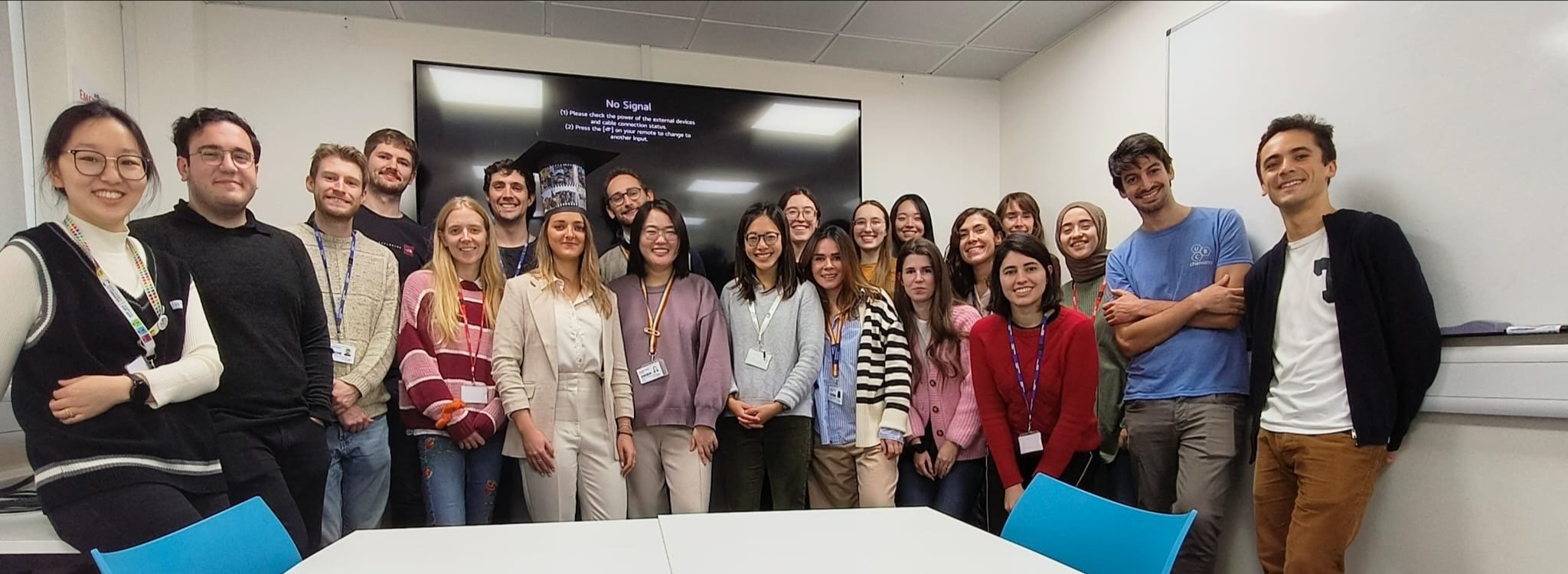
Huge congratulations to Mengnan on passing her PhD viva. Not only was she a brilliant PhD student but she was a great help to the scientific community by coordinating the Imperial College London Electrochemistry Network, amongst other significant contributions.


Great success of Titirici and Stephens group Christmas party!
We had a great time at our Christmas party and we were privileged to share the festive celebrations with the Stephens group. Happy Christmas to all, from the Titirici group!

Welcoming two visitors from Senegal
We are extremely grateful to have Abdourahmane and Ibrahima visiting from Université Cheikh Anta Diop de Dakar in Senegal. We look forward to hearing more about what research you are doing and hope to show you a flavour of what we are working on during your short stay with us.

Welcome to our new starters
We are excited to welcome four new starters this week: Manuella who is visiting us from Brazil for one year, Emma who is a new research associate and two new PhD students Nihat and Zeynep. Keep an eye out for their profiles to be added, where you can find out their exciting research plans!

Congratulations to Silvia Favero on passing her PhD viva!
Congratulations to Silvia who passed her PhD viva with no corrections! It was great to celebrate with Silvia’s co-supervisor and examiners.


Sam wins a poster prize!
It was great to see Sam’s hard work rewarded by winning a poster prize at the 1st Annual Symposium for Advanced Battery Materials.

Titirici group at Imperial Lates
We had a great time at the Imperial College Lates outreach event where we had the chance to share our exciting scientific research with members of the public, thanks to those who came along. Our exhibit was focused on how we are able to turn food waste into valuable products such as batteries to power your phone! Thanks Silvia for leading the event and organising, see our promotional video below:
New review paper out from the Titirici group
Silvia provides a fascinating review on the role of ionomers in anion exchange membrane fuel cells and electrolysers. Read more about it in the journal of Advanced Materials by following the link below:

NanoGe conference blues!
A look back on the fantastic NanoGe conference held in sunny Torremolinos. Many of our group members gave insightful talks and presented posters to academics in the early stages of their careers as well as more experienced scientists. Keep your eye out for the numerous fruitful collaborations that materialise from last week!


Tititrici group annual hike
We completed our annual group hike in September in which we walked from Faversham to Whitstable along the beautiful coast line. Major thanks to Helen for organising!


Congratulations to Ruixuan on passing his PhD viva!
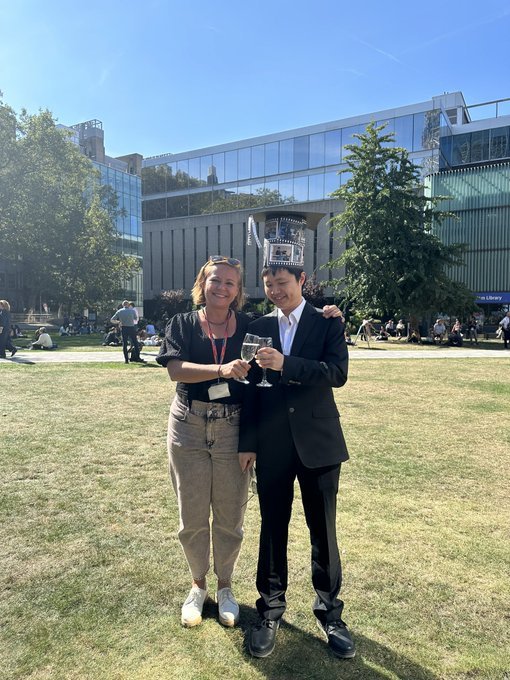

Congratulations to Richard Lobo for passing his PhD Viva!


Titirici group wins an award!
The Titirici group are extremely proud to have been awarded Imperial College London’s President’s Medal for Excellence in Research. See below the award being collected by Magda and group members: Matthew, Helen and Angus at the Presidents Awards 2023.

Congratulations to Johny Guo on passing his PhD viva!

VALUED programme launch
Magda hosted the official launch of the VALUED programme grant, the grant that is aimed to manufacture sustainable materials at scale whilst being guided by life cycle and technoeconomic assessment. Along with Magda’s introductory talk, several of he co-investigators on the grant introduced their projects and intended contribution to the ultimate goal. Make sure to follow VALUED twitter page to keep up to date with proceedings! VALUED (@VALUEDPG) / Twitter

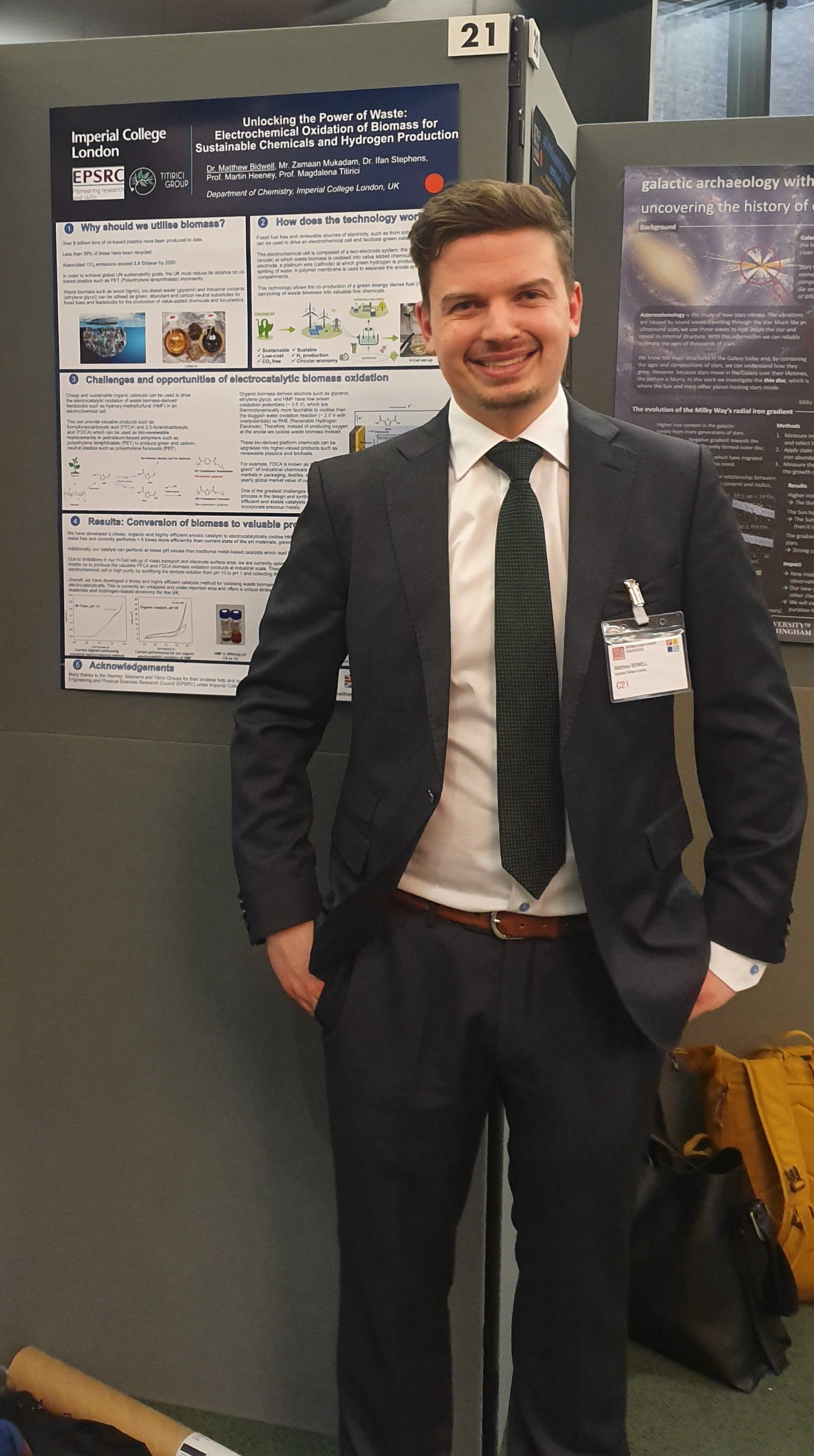
Group members Matthew and Sarat present posters at STEM for Britain
STEM for Britain is an annual poster competition held in the Houses of Parliament intended to support and promote Britain's early-career research scientists and engineers. Matthew and Sarat took part in the competition and relished the opportunity to discuss their fantastic sustainable research with MPs and fellow early-careers research scientists.

DIGBAT project led by Magda to accelerate the development of sustainable batteries
£1.6 Million funding for DIGBAT project, led by Magda, has been provided by the Engineering and Physical Sciences Research Council (EPSRC). The project will combine theory-led high throughput experimentation with data science and machine learning in order to progress the discovery and development of sustainable battery technologies and electrodes for sustainable e-fuels. Read more in the Imperial news article here: £1.6 million funding to accelerate alternative fuel and batteries research | Imperial News | Imperial College London
Chair in Emerging Technologies
Watch Magda’s interview discussing sodium-ion batteries and the role of the Royal Academy of Engineering Chair in Emerging Technologies: Chair in Emerging Technologies (raeng.org.uk). The scheme uniquely offers funding and support over ten years to help with progressing emerging technologies.
Energy Storage and Conversion Workshop
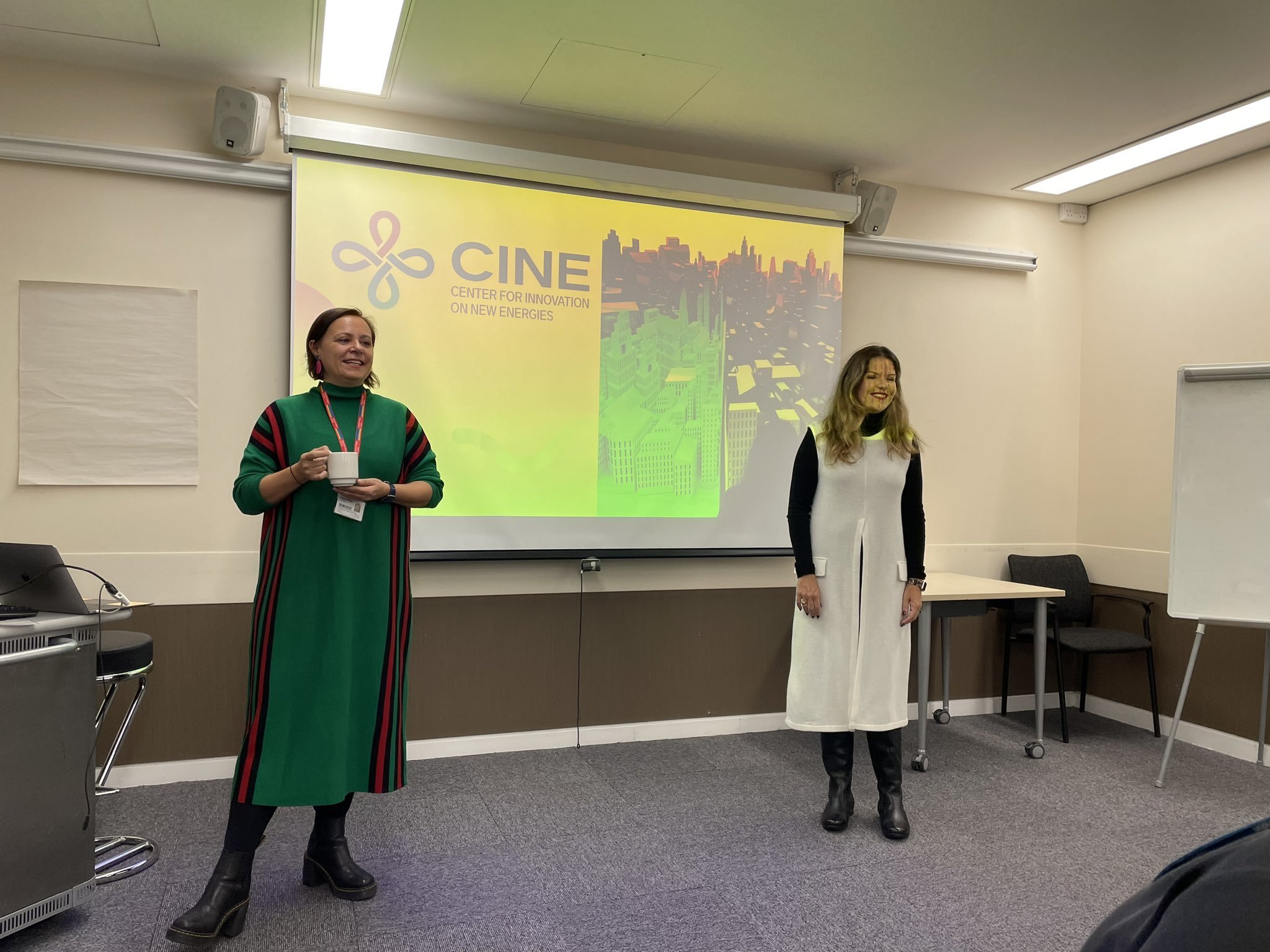
Magda hosted a two day workshop along with colleagues from Imperial, welcoming Cine Energy (Center for Innovation on New Energies) from Brazil. Exciting talks were held in the South Kensington campus for two days and then more talks continued in White City for a final day on Solar Fuels.
BBC News Article on Lignin-Based Batteries
Batteries with materials from lignin covered in BBC News article regarding the future of sustainable materials for energy solutions. The Titirici group’s research received a special mention including a quote from Magda:
Separate research into lignin-derived carbon anodes, by Magda Titirici at Imperial College London in the UK and colleagues, suggests that it is possible to make conductive mats containing intricate, irregular carbon structures with lots of oxygen-rich defects. These defects appear to heighten the anode's reactivity with ions transferred from the cathode in sodium ion batteries, says Titirici, which in turn shortens charging times: "This conductive mat is fantastic for batteries."
Read the full article here: